AI Study Platform - Italy
Verbatim
An AI product built to keep pace with real studying, not just the demo
About the project
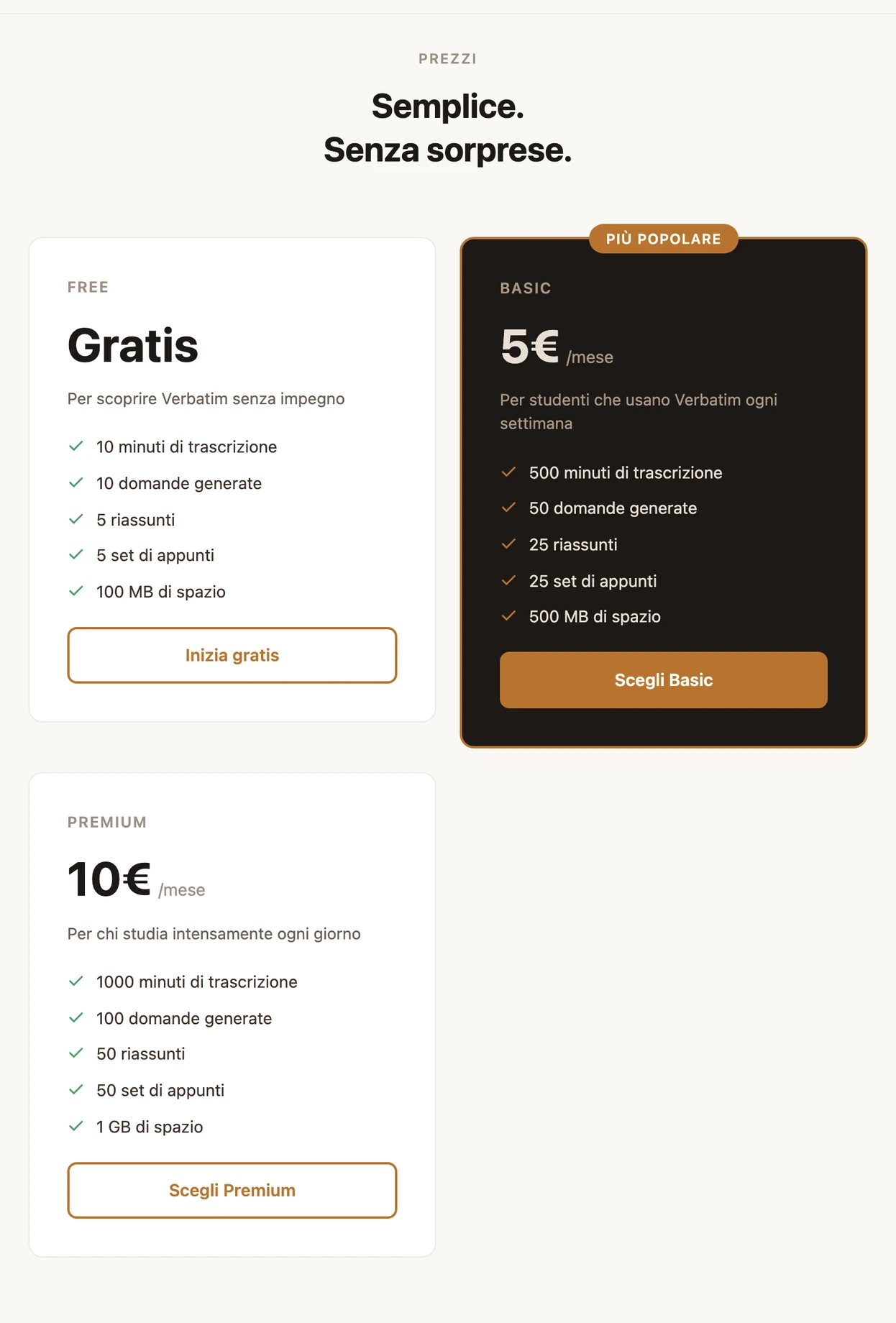
Every student does the same thing: record the lecture, rewrite the notes, hunt for the right material. Then the exam gets close and the time is already gone. Generic AI tools don't fix that — they're empty chat boxes waiting for a prompt, not a study workflow.
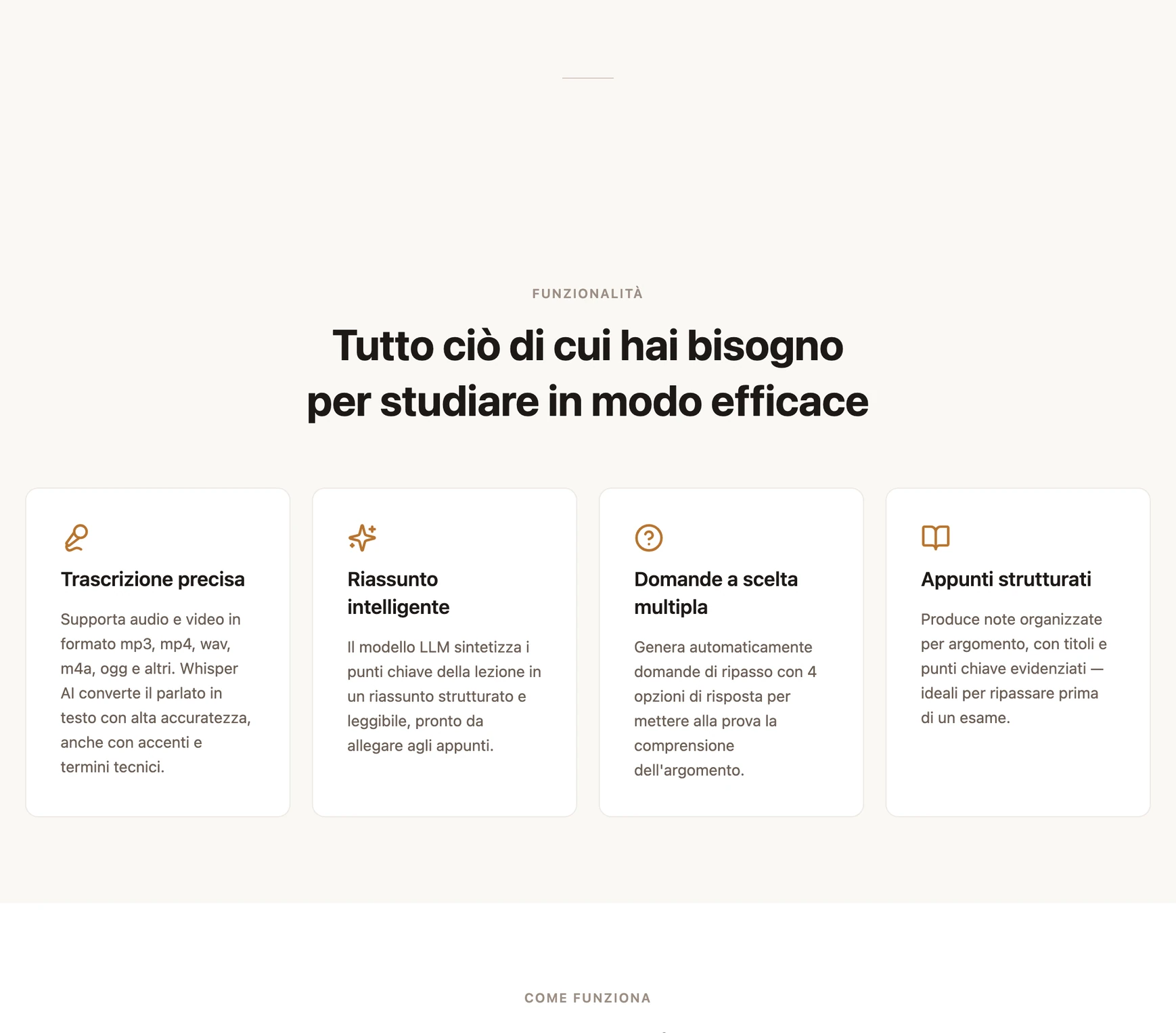
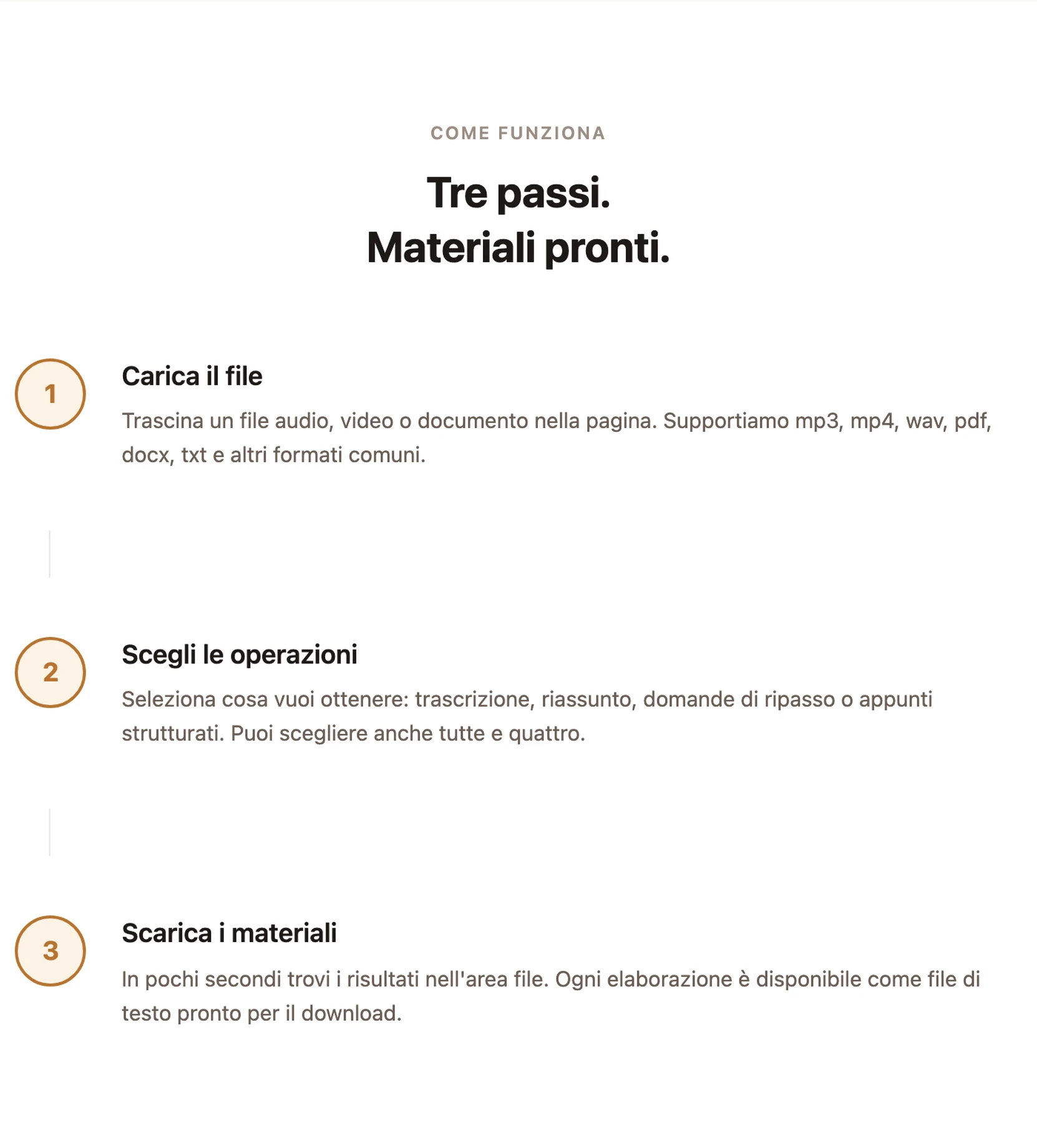
Verbatim starts there: upload a lecture or a document and get a transcription, a summary, review questions and structured notes. Not an experiment — a product with accounts, quotas, subscriptions and a pipeline that processes real files, the kind students actually record.
The ambition didn't stop at a single course. From the start Verbatim was designed to handle thousands of files, processing queues and inference costs under control — and that shaped almost every technical decision that followed.
Where it started, and how we moved forward
The project was already underway when it came to us: a working prototype, but without the groundwork an AI product needs. Before adding a single feature, we went back to the basics — flows, costs, reliability.
Synchronous processing: every upload kept the API busy until transcription finished.
We moved ML onto a queue: the API responds immediately, the worker processes, and every operation has its own status.
Ambiguous quotas and charges: a retry could bill the same operation twice.
We introduced a per-operation ledger: rows start as pending, failed operations are free to retry, credits are consumed once.
Five services, no single vantage point: debugging meant reading separate logs.
We centralised logging around a request_id shared across API, worker and microservices.
Inference tied to a single provider: cost and availability depended on one rigid choice.
We built an inference proxy that abstracts the model: local Ollama or NVIDIA APIs, without touching the worker.
The new architecture
With the foundation solid, we structured development into phases, each one building on the last.
C1Ingestion & accounts
Registration, email confirmation, password reset and validated multi-format uploads — the entry point for everything else.
C2Async pipeline
RabbitMQ queue, dedicated worker and Whisper microservice: long jobs isolated, with per-operation status and retries.
C3Study workspace
Dashboard, file area, job detail and result reading. Users can add operations later, rename jobs and get an AI-suggested title.
C4Billing & admin
Stripe subscription lifecycle, per-plan quotas, an admin panel and a distributed log console.
We chose a stack built for long jobs, not just fast requests.
Frontend
Next.js and TypeScript for the landing and the private area: server-side rendering where it matters, shared components, deployed on Vercel.
Backend
Flask + SQLAlchemy for the REST API, session auth and the quota ledger, with PostgreSQL as the source of truth.
AI Layer
Whisper-Faster-XXL for transcription, an inference proxy for summaries, questions and notes — swappable between local models and NVIDIA APIs.
Infrastructure
RabbitMQ and MinIO for queues and files, running on k3s with ArgoCD, Traefik, Cloudflare and KEDA autoscaling on queue events.
Where it stands now
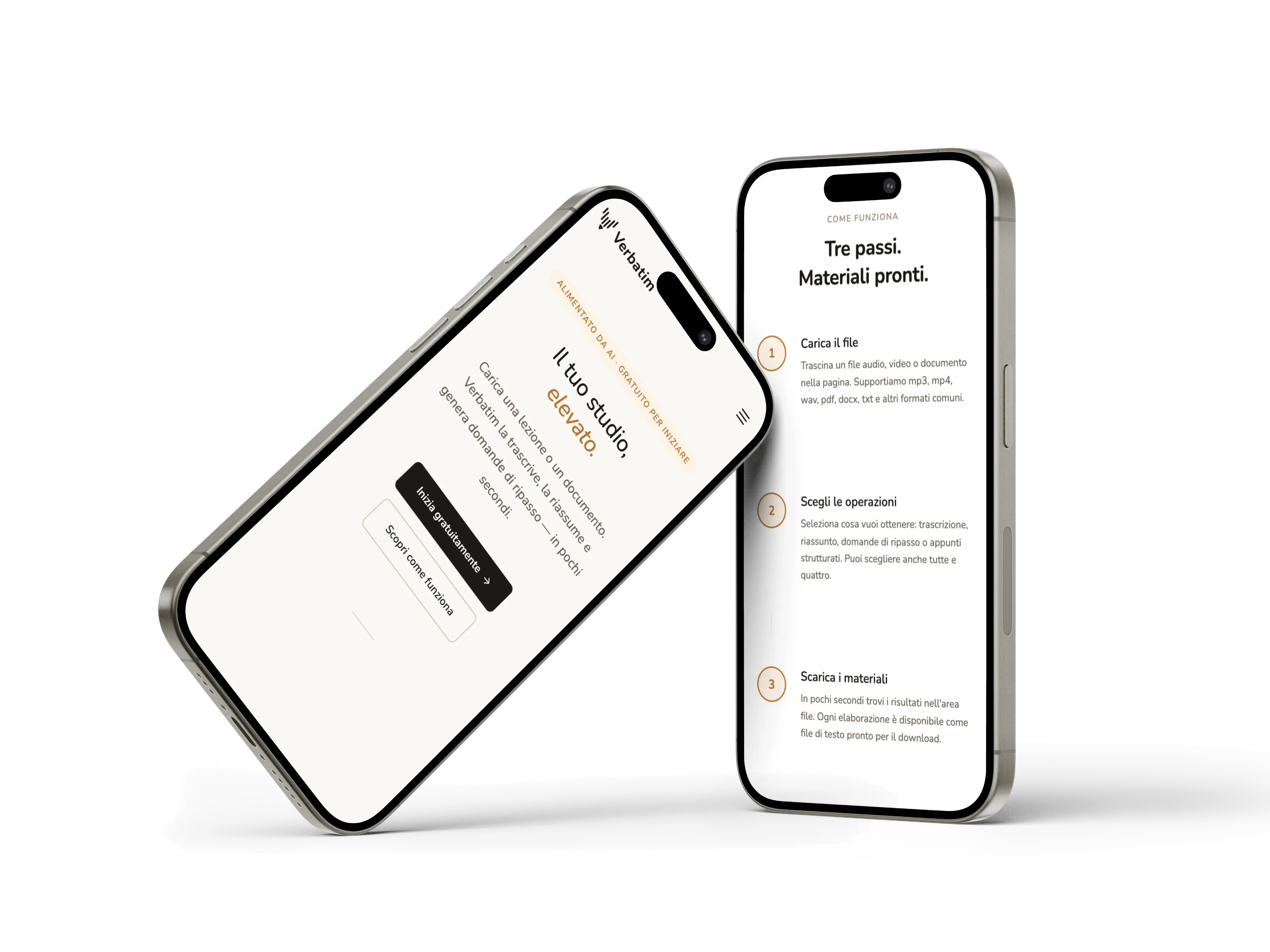
Verbatim is live and evolving. It isn't a project we delivered and walked away from: it's an Algios product we designed, built and keep growing.
We moved from a prototype with fragile foundations to a platform with real structure: students upload material and get results in seconds, subscriptions run their full lifecycle, infrastructure scales on events, and every operation has a traceable cost. The base is ready for the next phase — without rebuilding the previous one.